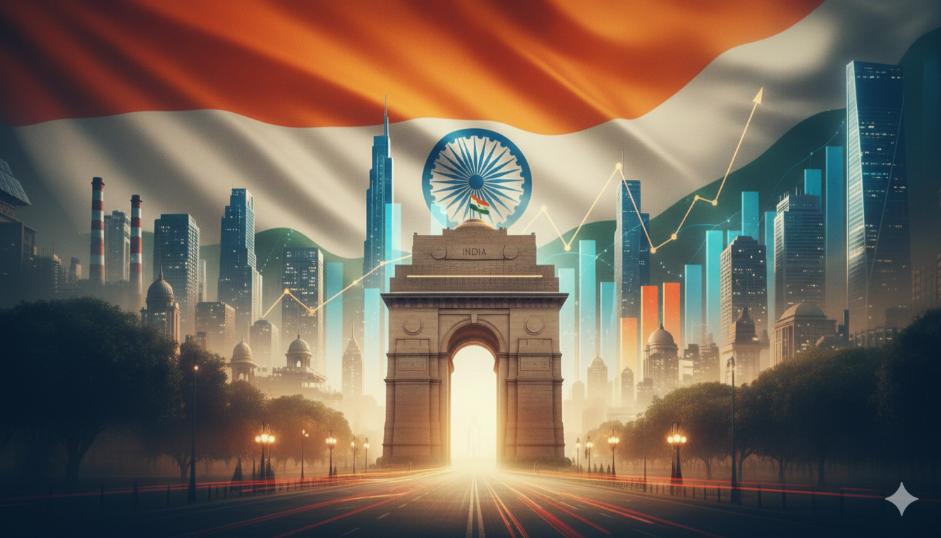
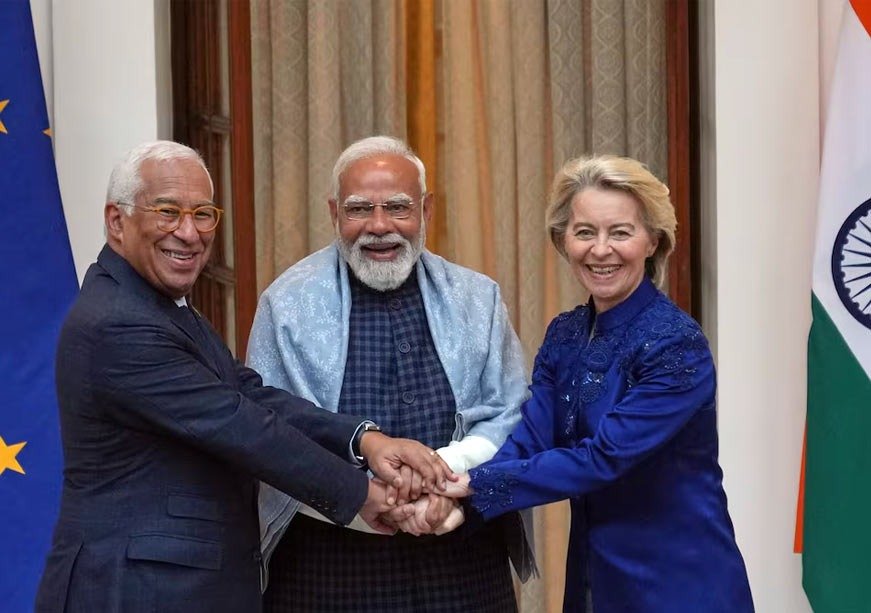
The formal conclusion of the India–European Union Free Trade Agreement (FTA) on January 27, 2026, represents far more than a diplomatic achievement. It marks a structural realignment in the global economic order, reaffirming the relevance of open markets, democratic partnerships, and rules-based trade at a time when protectionist tendencies are gaining ground.
By bringing together two of the world’s largest democratic economies—representing a combined market of nearly two billion people—the agreement stands as a clear statement of strategic intent. For India, now firmly positioned as the world’s fourth-largest economy, the FTA signals a transition from market participation to market leadership, strengthening India’s role as a rule-shaper in global commerce rather than a passive beneficiary.
From Market Access to Market Leadership
The India–EU FTA reflects growing confidence in India’s industrial capacity, institutional maturity, and long-term economic vision. It offers India a hedge against geopolitical uncertainty while enabling deeper integration into high-value global supply chains. More importantly, the agreement provides Indian exporters with greater stability through diversification, reducing reliance on limited geographies and enhancing resilience in an increasingly fragmented global economy.
Calibrated Liberalisation: The Technical Core of the Agreement
At the operational level, the FTA represents a carefully balanced framework of liberalisation. The European Union’s decision to provide duty-free access to nearly 99.5 per cent of Indian exports by trade value is particularly transformative for labour-intensive sectors that form the backbone of India’s MSME economy.
Indian textiles, apparel, handicrafts, and artisanal products, long constrained by tariff disadvantages in European markets, now gain immediate parity. From the first day of implementation, Indian producers are positioned to compete on quality, design, sustainability, and innovation, rather than absorbing the cost of trade barriers.
India’s Reciprocal Commitments and Economic Maturity
Equally significant are India’s reciprocal concessions under the agreement. The phased reduction of import duties on **European automobiles—from 110 per cent to 10 per cent under defined quotas—**along with liberalisation in the spirits and wines segment, reflects a decisive shift in India’s trade philosophy.
Sectors once regarded as politically sensitive have been opened with the understanding that competition can drive efficiency, expand consumer choice, and accelerate domestic capability-building. This approach reflects economic maturity, where openness is viewed not as vulnerability but as a catalyst for long-term competitiveness and innovation.
The MICE Multiplier: Where Trade Policy Meets Commerce
Beyond tariff schedules and legal provisions, the true impact of the India–EU FTA will be determined by its translation into commercial engagement. Trade agreements may be negotiated in ministries, but they are realised on factory floors, in boardrooms, and increasingly, at global exhibitions and trade fairs.
In this context, the MICE (Meetings, Incentives, Conferences, and Exhibitions) industry emerges as a critical enabler of trade. World-class exhibition and convention centres are evolving into strategic trade infrastructure, converting policy intent into buyer-seller interactions and long-term partnerships.
Indian Exhibitions as Gateways to European Markets
India already hosts a robust portfolio of internationally recognised B2B exhibitions that attract significant participation from European buyers, sourcing heads, technology providers, and institutional investors. With the India–EU FTA in force, these platforms are poised to receive a substantial boost in both scale and strategic relevance.
Flagship events such as the Indian Handicraft & Gift Fair, Garment Technology Expo, and the UP International Trade Show (UPITS) are expected to benefit directly from zero-duty access for labour-intensive and MSME-driven exports. These exhibitions function as critical sourcing hubs for European retailers, importers, and private labels seeking diversified, compliant, and resilient supply chains.
In the food and agri-processing segment, exhibitions including Indus Food, Food India, and BIOFACH India are likely to see heightened engagement from European buyers, particularly those focused on organic products, sustainable sourcing, and private-label partnerships. The FTA’s emphasis on trade facilitation and regulatory alignment further enhances India’s attractiveness as a long-term sourcing destination for European food markets.
For capital-intensive and technology-driven sectors, platforms such as Auto Expo and ELECRAMA play a pivotal role in linking European technology with Indian manufacturing scale. These exhibitions already attract strong participation from German, Italian, French, and other EU-based companies, and the FTA is expected to accelerate technology transfer, industrial collaboration, and investment-led partnerships across automotive, electrical, and advanced manufacturing ecosystems.
Collectively, these exhibitions operate as live marketplaces, translating tariff liberalisation into tangible outcomes such as contracts, joint ventures, and cross-border expansion strategies. Their growing importance reinforces the role of exhibition infrastructure as a core pillar in the effective implementation of modern trade agreements.
Exhibition Infrastructure as Trade Enablers
In the post-FTA environment, exhibition and convention infrastructure will play an increasingly decisive role in shaping trade outcomes. While ports and logistics corridors remain essential, platforms that enable direct engagement, trust-building, and deal-making are becoming equally indispensable. Trade liberalisation opens doors, but sustained interaction converts opportunity into investment, partnerships, and long-term market presence.
Industry Perspective: Strengthening Export Resilience
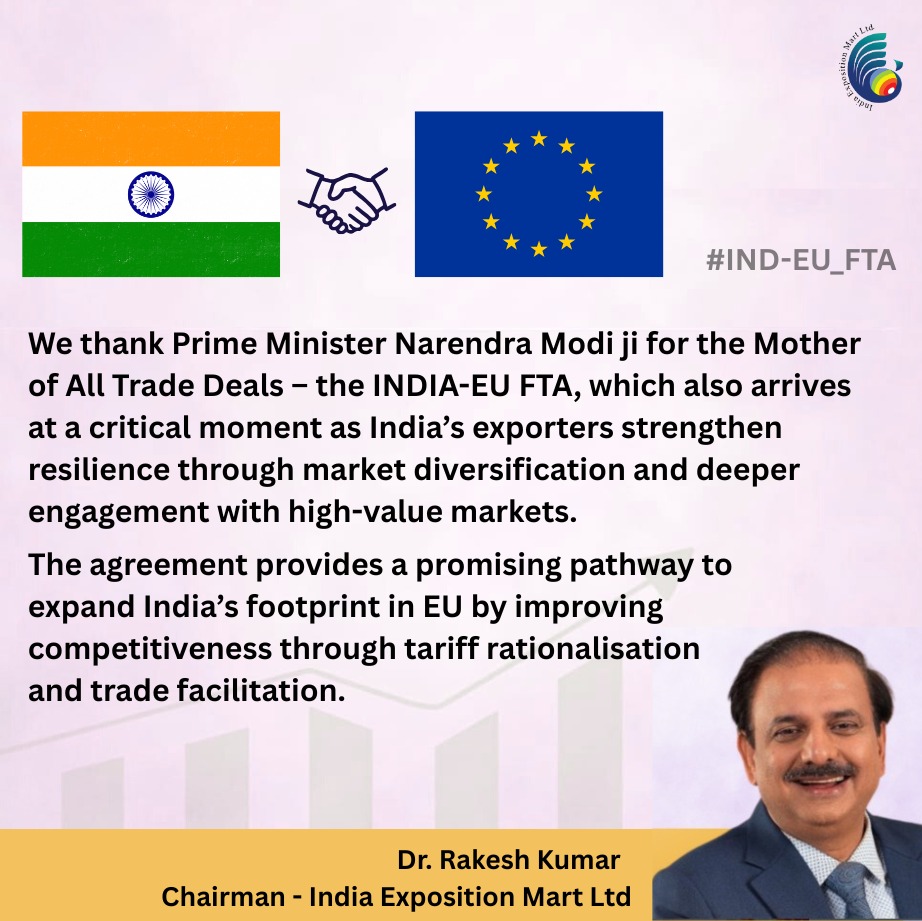
Reflecting the industry’s optimism, Dr. Rakesh Kumar, Chairman, India Expo Centre & Mart, highlighted the strategic significance of the agreement:
“We thank Prime Minister Narendra Modi ji for the Mother of All Trade Deals—the India–EU FTA—which arrives at a critical moment as India’s exporters strengthen resilience through market diversification and deeper engagement with high-value markets. The agreement provides a promising pathway to expand India’s footprint in the EU by improving competitiveness through tariff rationalisation and trade facilitation.”
The Regulatory Reality: Beyond Tariff Liberalisation
While tariff barriers are being dismantled, regulatory and compliance requirements are becoming more stringent, particularly in the sustainability domain. The European Union’s Carbon Border Adjustment Mechanism (CBAM) poses a significant challenge for carbon-intensive sectors such as steel, cement, aluminium, and power-linked manufacturing, requiring robust emissions measurement and reporting mechanisms.
Additionally, the EU’s deforestation regulations demand full traceability across supply chains, affecting industries such as leather, furniture, and agri-based manufacturing. Legally binding commitments to International Labour Organization (ILO) standards further require Indian MSMEs to align with global norms on wages, workplace safety, and social compliance. Stringent technical, sanitary, and phytosanitary standards will necessitate rapid upgrades in quality systems and manufacturing processes.
From Ambition to Execution
Taken together, the India–EU FTA represents more than a commercial arrangement; it is a symbol of interdependence in a fragmented global economy. By embedding itself within European value chains, India gains access to technology, capital, and best practices, while offering scale, demographic strength, and industrial depth in return.
As implementation unfolds, the central challenge will be execution. For MSMEs, this means scaling operations while upgrading standards. For trade facilitators and exhibition leaders, it means creating platforms that enable seamless engagement between global buyers and Indian producers. The framework is in place, the market is open, and the opportunity is unprecedented. The outcomes will now depend on how effectively ambition is translated into performance.